
Thermos for children, a hot meal in their school bag
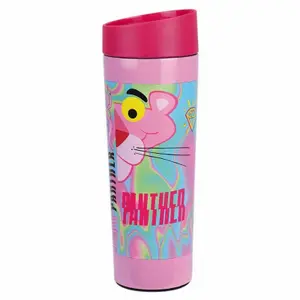
A children’s thermos lets you take a meal or drink with you and keep it hot or cold for hours, without a microwave or fridge. An insulated bottle for morning hot chocolate, or a wide-opening flask for soup and pasta at lunchtime: the format depends on what it holds. The stainless steel Fun House Pink Panther thermos, with its character design, is easy to spot at a glance in your bag.
Hot at lunchtime, cool at snack time.
How a double-walled thermos works
A thermos has a double stainless steel wall with a vacuum in between. Heat travels very poorly through a vacuum, which neither conducts nor carries it in the way air or water does. This means the contents stay at the right temperature for much longer than in a regular water bottle. The principle comes from the vessel developed by Scottish physicist James Dewar in 1892. The name Thermos, taken from a Greek word linked to heat, was registered as a trade mark in 1904 before becoming a generic name.
The weak point is still the lid: most of the heat escapes through it, so it’s important to keep the seal in good condition and fill the flask almost to the top.
Other containers for your child’s meal
A thermos rarely goes on its own. A lunch box holds the rest of the meal, such as a sandwich, fruit or dessert, while water bottles keep water cool throughout the day. At home, cups and a bowl are used for breakfast, while a dinnerware set brings together a matching plate and cutlery.
Insulated bottle or food flask: choose according to what’s inside
- An insulated bottle, with a narrow neck, is suitable for drinks: warm milk or herbal tea in winter, cool water in summer. A spout or straw lid means it can be used without a cup, but straws should only be used for cold drinks, as sucking up a drink that’s too hot could burn the mouth.
- An insulated food flask, with a wide opening, holds soup, purée, pasta or ratatouille; it can be emptied with a spoon and cleaned without a bottle brush.
- Choose the capacity according to your child’s appetite: a small one is enough for a snack, while a larger one is needed for a full lunch on a school trip.
Keeping a meal hot until lunchtime
The secret is to preheat it: fill the thermos with boiling water, close it for a few minutes, empty it, then pour in the piping-hot meal straight away. Otherwise, a cold inner wall will absorb some of the heat right from the start. Fill it as much as possible, as any air left inside will cool the contents.
For food safety, catering rules require hot food to be kept at 63°C or above: a meal poured in piping hot in the morning will stay in good condition until lunchtime, while food that’s already lukewarm to start with encourages bacteria to multiply. In summer, the same thermos, cooled with iced water, keeps pasta salad or compote cool.
Thermos on offer, from back-to-school to winter trips
A thermos is most useful in cold weather, making Black Friday a good time to get one before winter school trips. It also makes a useful present for a child going on a school ski trip. The winter sales and spring French Days are good times to replace a dented model, while the summer sales and back-to-school season are the time to get ready for picnics and the return to school. End-of-line products can be found in the childcare clearance section.
Frequently asked questions
Can you put a thermos in the dishwasher?
It depends on the model: many stainless steel thermoses should be washed by hand, as the heat and detergents in a dishwasher can damage the outside design and weaken the vacuum seal. Check the symbol on the base or read the instructions.
Can you heat food directly in its thermos in the microwave?
No, never: stainless steel is a metal that can cause sparks in a microwave, and the double wall could warp. Heat the food in a pan or a suitable container, then transfer it to the preheated thermos.
Which drinks should you avoid putting in a child’s thermos?
Avoid fizzy drinks, as the pressure could make the lid pop off when opened, and don’t leave lukewarm milk in it for several hours. Fruit juice keeps well, but rinse the flask quickly after use to prevent smells.
How do you get rid of the smell of soup in a thermos?
Fill it with hot water and a spoonful of bicarbonate of soda, leave it overnight, then rinse it. Also remove the seal from the lid and wash it separately: that’s what holds on to smells the most.
Will my child be able to open their thermos on their own at school?
It depends on how strong their hands are and the type of lid: a push-button lid is easier to open than a tightly screwed one. Let them try it at home before their first trip, with lukewarm contents, to avoid burns and spills.